
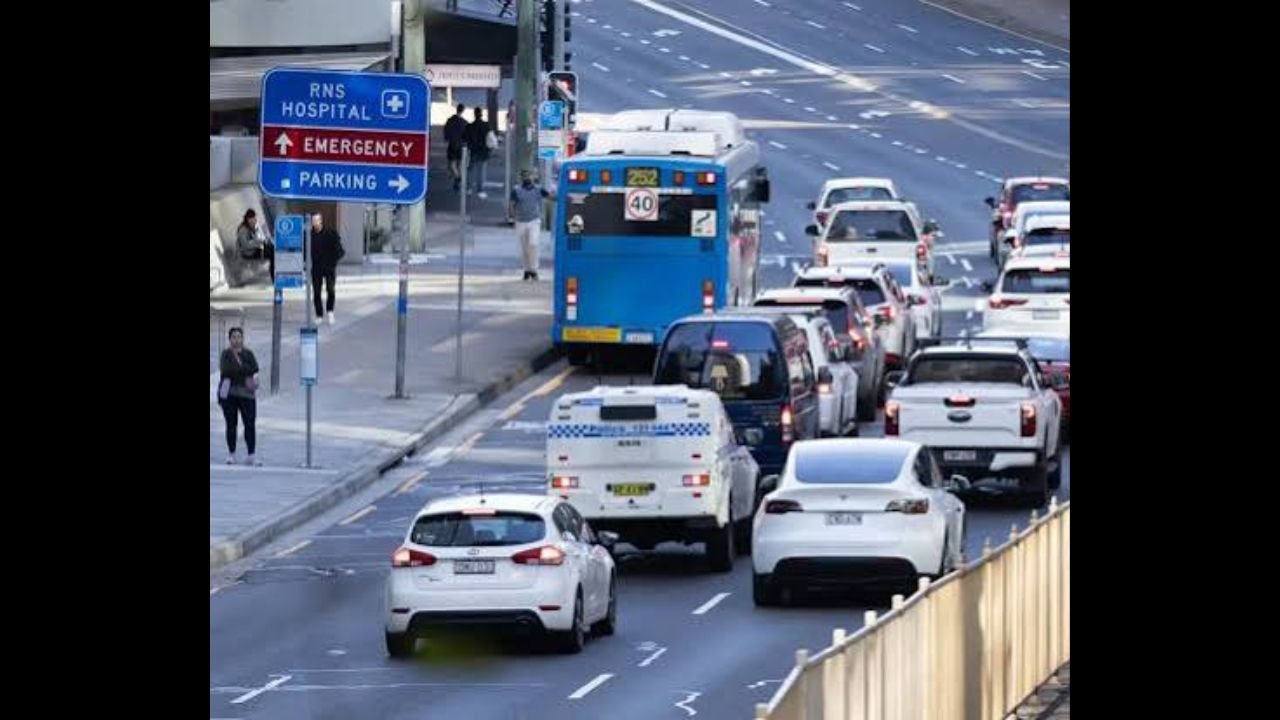
Australian motorists battling packed roads, slow commutes and expensive parking may not be surprised by the city sitting at the top of a new driver stress ranking.
Sydney has been named Australia’s most stressful major city to drive in, according to new research comparing the pressures motorists face behind the wheel.
The study by Compare the Market examined 79 cities worldwide and measured several factors capable of turning an ordinary trip into a frustrating one. These included traffic congestion, average road speeds, commute times, traffic inefficiency, parking difficulty and the number of days affected by adverse weather.
Sydney received an overall driver stress score of 56 out of 100, putting it ahead of Adelaide, Melbourne, Brisbane and the Gold Coast among the Australian cities assessed.
The result highlights how several everyday problems can combine to make driving difficult even when no single factor tells the entire story.
Sydney tops list
Sydney’s lengthy commute was one of the major contributors to its position.
The research put the city’s average commute at 43.52 minutes, while its median congestion level was listed at 43.7 per cent.
Weather added another complication, with Sydney recording 140 adverse weather days under the study’s methodology.
Those pressures come on top of the challenges created by a large population, busy arterial roads and heavy demand across the metropolitan motorway network.
Separate data from TomTom’s Traffic Index illustrates just how much time congestion can consume.
Sydney drivers lost an estimated 93 hours to traffic during 2025, equivalent to almost four complete days spent dealing with congestion over the course of the year.
Parking hurts
Finding somewhere to leave the car can make the Sydney driving experience even more frustrating.
A separate 2026 parking analysis identified Sydney as Australia’s toughest capital CBD for parking, based on factors including availability and cost.
Drivers were reported to have access to only 156 parking spaces within a two-kilometre radius of Sydney’s CBD under that study’s methodology.
Cost was another major hurdle, with hourly parking averaging around $32.
That means motorists heading into central Sydney can face pressure at both ends of a journey: congestion getting there and limited, expensive parking once they arrive.
For commuters with less flexibility over where and when they travel, those factors can be difficult to avoid.
Adelaide second
Sydney did not dominate every individual measure.
Adelaide ranked as Australia’s second-most stressful city for drivers with a score of 51 out of 100, despite performing comparatively well when it came to parking.
Its standout problem was congestion.
The study recorded a 55.1 per cent congestion level for Adelaide, notably above the figure attributed to Sydney.
The result demonstrates why the overall ranking considered multiple factors rather than simply identifying the Australian city with the most congested roads.
A city may perform relatively well for parking or commute duration but still accumulate a high stress score because of slow traffic or other conditions.
Melbourne third
Melbourne followed closely behind Adelaide, earning a driver stress score of 50 out of 100.
Parking difficulty was one area where Victoria’s capital performed better, but traffic remained a significant problem.
TomTom’s 2025 figures put Melbourne’s congestion level at 52.9 per cent.
Even more striking was the amount of time motorists lost.
Melbourne drivers spent an estimated 103 hours caught in congestion during 2025, equivalent to approximately four days and seven hours.
That was 10 hours more than the annual congestion time reported for Sydney, despite Melbourne finishing below Sydney in the broader stress ranking.
The difference again reflects the range of measures used to calculate the overall result.
Brisbane fourth
Brisbane took fourth position among the Australian cities examined, recording a stress score of 49.21 out of 100.
The Queensland capital’s average commute came in at about 42 minutes, putting considerable time pressure on motorists travelling regularly through the city.
Weather also played a substantial role.
The study attributed 148 adverse weather days to Brisbane, the highest figure among several of the leading Australian cities highlighted in the results.
Heavy rainfall and storms can add another layer of difficulty to commuting by reducing visibility, slowing traffic and increasing delays.
Gold Coast fifth
The Gold Coast completed Australia’s top five with a score of 49.01 out of 100, only narrowly behind Brisbane.
Traffic data showed that congestion remains a sizeable issue for motorists in the coastal city.
During 2025, Gold Coast drivers lost an estimated 71 hours to traffic, while congestion was measured at around 48 per cent.
Although its overall stress score remained below those of the four capitals above it, continued population growth and high travel demand mean congestion is an important issue for local motorists.
Australia’s top five
Based on Compare the Market’s overall driver stress scores, the leading Australian cities were:
Sydney — 56/100
Adelaide — 51/100
Melbourne — 50/100
Brisbane — 49.21/100
Gold Coast — 49.01/100
The scores should not be interpreted simply as a ranking of traffic congestion. They combine several measures designed to reflect the broader experience of driving in each location.
That explains why Melbourne motorists could lose more annual hours to congestion than Sydney drivers while Sydney still finishes higher overall.
Global leader
Australia’s busiest cities were not the worst internationally.
Across the 79 global cities included in the research, Dublin ranked as the most stressful place to drive.
Ireland’s capital recorded a 73 per cent congestion level, while its average traffic speed was just 17.4km/h.
Dublin was also listed as experiencing 167 days of adverse weather annually, adding another difficulty for motorists.
The combination pushed the city ahead of the other locations assessed in the global study.
Why stress builds
Compare the Market’s general insurance chief executive Adrian Taylor said the research indicated that difficult driving conditions rarely stem from one problem alone.
Instead, motorists can face a combination of congestion, slow-moving traffic, lengthy commutes, parking problems and challenging weather.
The findings help explain why a driver in one city might face worse congestion but still experience fewer overall pressures than somebody driving elsewhere.
For motorists, preparation remains one of the few factors they can directly control. Checking traffic before leaving, allowing extra travel time, monitoring weather conditions and finding parking before arriving can reduce some uncertainty.
But for drivers navigating Australia’s largest cities every day, the latest ranking shows just how quickly those individual pressures can accumulate — and Sydney currently carries the country’s highest overall driver stress score.