
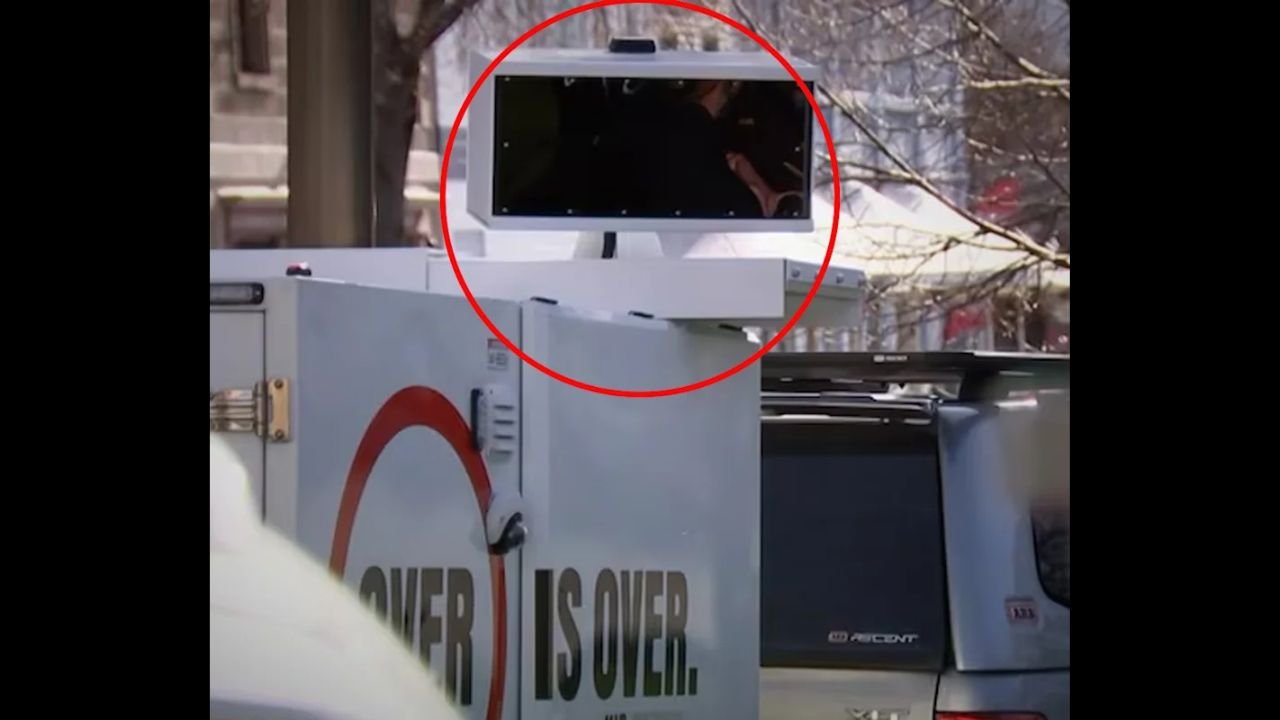
Drivers in Tasmania could face a significant expansion of automated traffic enforcement under proposals aimed at tackling the state’s stubbornly high level of road deaths and serious injuries.
The Royal Automobile Club of Tasmania (RACT) is pushing for more automated road safety cameras, longer enforcement hours and greater coverage of high-risk roads, arguing that the state’s existing decade-long road safety strategy has fallen well short of its central target.
The call comes as Tasmania prepares its next road safety strategy from 2027, with the current Towards Zero Road Safety Strategy 2017–2026 reaching its final months.
That strategy set an ambitious goal of reducing the annual number of people killed or seriously injured on Tasmanian roads to fewer than 200 by 2026.
The target has not been reached.
Official government figures show 43 people died and 282 were seriously injured on Tasmanian roads during 2025. The government reports 324 people were killed or seriously injured under its combined serious-casualty measure.
Cameras targeted
RACT wants Tasmania’s automated enforcement network significantly expanded as part of the next road safety strategy.
Its proposals include deploying automated cameras for longer periods and extending coverage across roads identified as presenting a high safety risk.
RACT Group CEO Mark Mugnaioni said the existing strategy had failed to deliver its headline objective and argued that simply making minor adjustments would not be enough.
The organisation says mobile cameras have demonstrated potential to change driver behaviour and wants enforcement to form part of a broader package rather than operate as a standalone measure.
Tasmania already operates an Automated Traffic Enforcement Program in partnership with Tasmania Police.
The program uses mobile speed cameras as part of efforts to reduce speed-related trauma. The state’s transport authority says enforcement works most effectively when combined with public education.
Revenue push
RACT’s proposal goes further than simply increasing the number of cameras motorists encounter.
It wants 100 per cent of revenue generated by camera-detected traffic offences directed into road safety initiatives.
Money raised through enforcement would be used for measures such as road infrastructure, education programs and research.
The organisation argues that directly connecting fine revenue with safety spending would provide greater transparency around the purpose of enforcement.
According to RACT, more than 80 per cent of its members support automated speed cameras, while 95 per cent support directing fine revenue into road safety.
RACT has previously argued that Tasmania differs from other Australian states because camera revenue is not specifically hypothecated to road safety investment.
Limits could fall
Some drivers could also encounter lower speed limits if another RACT recommendation is adopted.
The organisation wants authorities to reduce speed limits where existing road infrastructure cannot safely support the current posted speed, particularly when major upgrades are unlikely to happen for years.
Rather than waiting for expensive reconstruction projects, temporary or longer-term speed reductions could be introduced as an interim safety measure.
Tasmania’s transport authority says speed is an important factor in serious casualty crashes because it affects both the likelihood and severity of an impact. Even relatively small changes in vehicle speed can influence outcomes across a road network.
RACT is also seeking a statewide geospatial road safety risk map to identify dangerous parts of the network and help determine where investment and enforcement should be concentrated.
Bigger road plan
Cameras and lower speed limits form only part of the proposed overhaul.
RACT has called for a rolling 40-year plan covering Tasmania’s entire road network, backed by detailed 10-year plans for major corridors.
It has identified the Bass Highway as a major future investment priority while also calling for completion of the Midland Highway program.
The proposed risk assessment would help determine which corridors should receive attention after those projects.
Tasmania’s extensive regional network presents a particular challenge. RACT has previously said around 60 per cent of road deaths occur in rural areas, while local roads account for thousands of kilometres of the state’s network.
Young drivers
Another major focus is younger and inexperienced motorists.
RACT says these drivers remain overrepresented in crash statistics and wants the next strategy to place greater emphasis on how learners are taught before receiving their provisional licences.
Its proposals include improving the skills of parents and other supervising drivers, rather than focusing solely on learners themselves.
RACT is already working with the Tasmanian Government on a multimillion-dollar youth road safety initiative examining how young people learn safer driving habits.
The organisation also supports introducing Used Car Safety Ratings and examining ways of improving access to safer vehicles for younger and lower-income motorists.
Target missed
Tasmania’s current Towards Zero strategy began in 2017 and was based on the Safe System approach, which recognises that people will make mistakes and seeks to design roads, vehicles and rules so those mistakes are less likely to cause death or life-changing injury.
Its short-term benchmark was clear: fewer than 200 fatalities and serious injuries annually by 2026.
With the strategy now ending, the government itself acknowledges that target has not yet been achieved.
Tasmania recorded 43 road deaths in 2025, compared with 31 in 2024. The state’s 10-year average through 2025 was 35.1 fatalities and 280.2 serious injuries annually.
RACT separately reported in January that Tasmania experienced the largest percentage increase in road deaths of any Australian state during 2025, citing Australian Automobile Association figures showing a 41.9 per cent rise over the 12 months to December 31.
What happens next?
The Tasmanian Government is now developing the road safety strategy that will replace Towards Zero from 2027.
Public consultation on the new framework closed on October 6, 2026, following regional stakeholder workshops held in Burnie, Launceston and Hobart earlier in the year.
The government says the replacement strategy will continue to follow the Safe System approach and take account of changing travel patterns, vehicle technology, population growth and emerging risks.
RACT wants a more fundamental reset, including an independent taskforce, greater camera enforcement, safer speed limits, long-term infrastructure planning and transparent reinvestment of enforcement revenue.
For Tasmanian motorists, the debate now shifts from whether the previous target was achieved—it wasn’t—to which measures authorities will adopt in an attempt to reduce road trauma under the strategy that replaces it.